Amerigo Vespucci - Italian Explorer
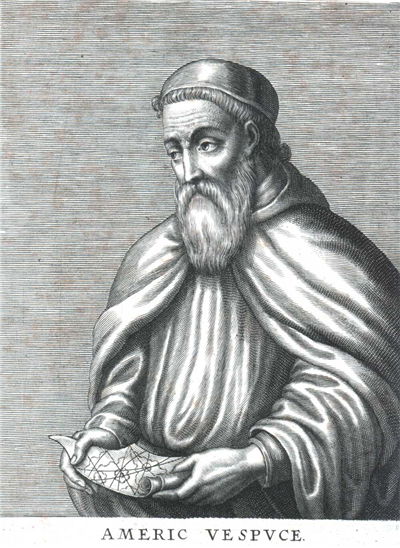
Amerigo Vespucci was an Italian explorer, cartographer and navigator, best known for naming the North American continent with a slight
variation of his first name and for proving the fact that New World is not part of an Asia but a new continent.
He was born in Florence, Italy in 1454 where he worked for the famous Medici family as a banker. In 1492, he moved to Spain, and few
years later in 1458 king Manuel I of Portugal invited him to be part of a crew that will explore the Indian Ocean. Historical records of his
journeys to the New World are not completely accurate, there is speculation of four but only two are completely verified.
On that journey under the leadership of Captain Alonso de Ojeda flotilla of ships separated in two parts, and Vespucci headed to the west
toward the Brazil. There he discovered mouth of the great Amazon River. On a next expedition, he was elected to be a leader and they
discovered that land of South America extended far more to the south than they have previously thought. On his way back, he passed near the
rivers of Trinidad and Orinoco.
In 1501, he embarked on his last journey that was lead by the Portuguese explorer Gonçalo Coelho. Again, they explored the land of South
America reaching the bay of Rio de Janeiro. During that time, he observed that Americas land size is way bigger than previous estimates and
that these lands must be considered to be a fourth continent.
During his voyages, he mapped several charts of the nigh sky seen from the southern hemisphere, most notably constellation Southern Cross
as well as the Alpha and Beta Centauri. Publication about his journeys released around 1503 made him very popular in Europe, and few years
later German cartographer Martin Waldseemüller made a map of Vespucci’s journeys in witch for the first time he named the newfound continent
America. Christopher Columbus wrote several times about Vespucci, and he never objected to the naming of the new continent.
Popularity of his journeys made him one of the most important explorers of that time and in 1508, King Ferdinand named him the chief
navigator of Spain with the responsibility to coordinate and plan Spain’s naval ship exploration of the Indies and the New World. He also
founded first school of navigation with duties to standardize navigation techniques used by naval captains of that time.
He died in Spain on February 22, 1512 at the age of 57.